
The yearly summit takes place on Saturday, March 7, at the Los Angeles Convention Center. For students and parents who cannot make the summit, Dr. Dale Okorodudu has authored books and has a YouTube series that details the path to becoming a medical professional. Also stay up to date with Cedars-Sinai's community programs.
By Jason Lewis
African American male doctors account for less than three percent of U.S. physicians and also less than three percent of medical school students even though the total amount of Black students and students of color has increased. African American women are a rapidly growing demographic in medical schools, accounting for over 60 percent of African American medical school students. The stagnant numbers for Black male physicians and medical students prompted Dr. Dale Okorodudu to create Black Men in White Coats, which has a mission of increasing the number of Black men in the field of medicine.
“The way Black Men in White Coats initially got started was because I saw a report from Dr. Martin Faye in 2012 that said that the number of Black men applying to med school was decreasing while every other race and gender group was going up,” Okorodudu said. “Black women were going up. Everybody's going up, but Black men were going down. I said, ‘Wow, this is crazy, we got to do something about it.’ Black men were getting left behind, not just left behind in enrollment, but we were a second thought when it came to education, and there's a lot of data about this in the world of academic education. Black boys don't get pushed into education as much as other people. For us, the culture is sports, entertainment, music, stuff about performance, as opposed to saying, ‘Hey, you can be a doctor and those things like that.’”
Okorodudu has authored 14 books on this subject, several of which are about becoming a doctor. He turned Black Men in White Coats into a summit series that he held in cities around the nation. That led to the partnership with Cedars-Sinai Medical Center, which had documented the same issue.
“We saw that huge disparity,” said Nicole Mitchell, Cedars-Sinai chief diversity and inclusion officer. “I started looking at that when I came in as the chief diversity officer, like, what's our representation look like? How are we doing? What do all of our residents look like? And we started seeing gaps, and I found out about Dr. Dale and the work he was doing, and he had just launched his documentary about Black Men in White Coats and really talking about that disparity in the medical field and in med schools. We're seeing more women enter med school than men of all races. So I think it is a conversation that we need to continue to have and talk about how do we support Black boys particularly, and Black men to get into this field where they're so desperately needed to help close disparity gaps in healthcare.”
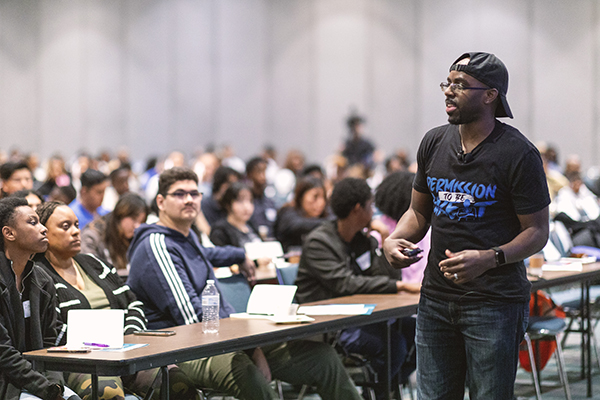
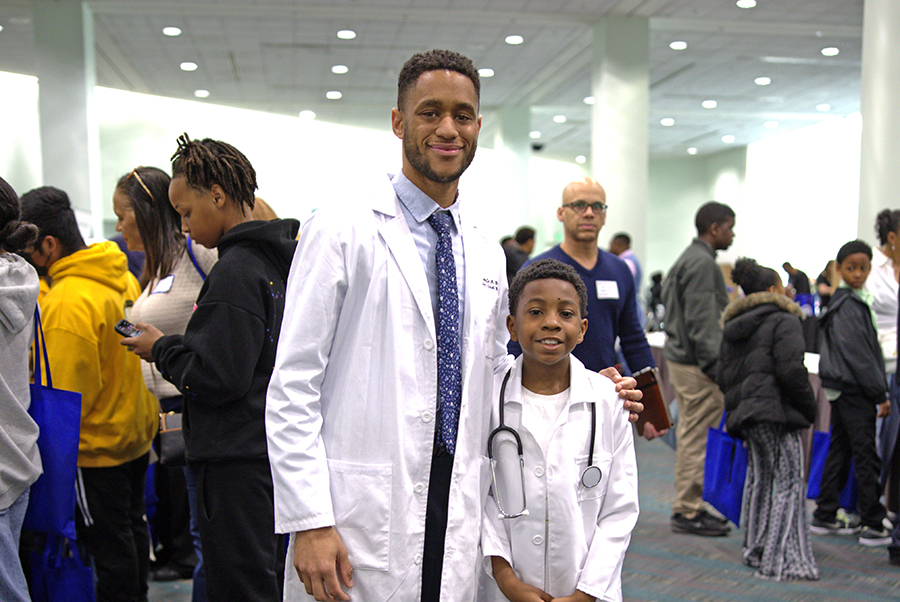
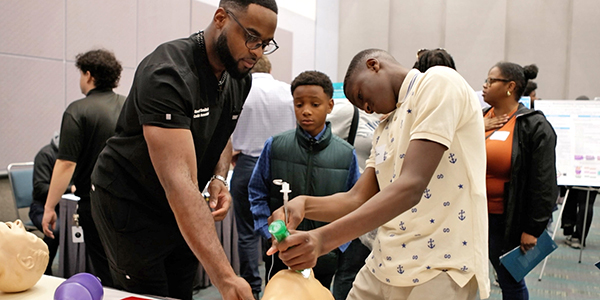
While the summit was created with Black boys in mind, the event is open to both boys and girls of all races. It is a fun-filled day with guest speakers from the medical profession and hands-on activities so that the children can get a feel for what it is actually like to be a doctor.
“The whole idea is to bring kids into the presence of healthcare,” Okorodudu said. These are hands-on medical exhibitions and more importantly to give them the opportunity to meet healthcare professionals who look like them. It is impactful for somebody to see somebody that looks like them and in that situation they can see themselves in that.”

The interaction and networking at this summit helps the students along their path.
“It's really hoping that we can find some mentorship opportunities for these young people and having them meet each other, which I think is always a big piece when you find like-minded folks, that's always helpful as you're on your own journey,” Mitchell said.
With the very small percentage of Black doctors, most Black children do not have a doctor in their family or in their close network, so they are not exposed to the profession like children from more affluent areas. This makes it difficult for an interest in becoming a doctor to be sparked.
“I’ve been in this space for a long time and I think it is if you don't see it you don't know that you can be it,” Mitchell said. “And that's really the reason that this youth summit started. You get the hands-on activities, so you can actually see what does it mean to use some of these tools. And these young people get to actually touch and feel it, so it makes it feel very real.”
“It's important that we think that young Black men and women, boys and girls, can look up and see people who look like them doing amazing things,” Okorodudu said. “Helping take care of lives and also being leaders in society. For the boys and girls to actually see what that looks like and when they see that they can think, ‘Hey, maybe I can do that too.’ It might be that one day this one youth summit where they're exposed to the cool stuff in medicine, where they're exposed to see these are doctors who look like me. That one day might be the thing that changes their goals, their life, their mission, the direction they want to go.”
While there are many doctors who navigated their way to the profession without guidance from family members who are doctors, it is a more difficult road. Mentorship and summits such as Black Men in White Coats which gives the children a roadmap are extremely helpful.
“People can figure it out, but the general idea is about seeing stuff, so that's where it starts,” Okorodudu said. “The first thing is letting them see that they can be it. That's the first thing, the exposure. The second thing is a network. So they get there, they see it's possible, and then the big part of our summit is really it's not just, hey, don't just look around, but network. Meet somebody, get somebody's email, get somebody's phone number, and follow up with them. We've had a lot of individuals get shadowing opportunities from these summits, and not just the shadowing, but also resources. To get plugged into resources and systems, and it's the hidden curriculum. There's a lot of stuff that people in our culture might not know which pertains to high-level education, academics, and what we want to do with these summits is we want to make that hidden curriculum no longer hidden. We want to say, okay, here's what you need to know. Here's where you can find it. Here's how you can get plugged into all these things you want to get plugged into.”
The summit also gives parents the information that they need so that they can guide their children through the process of entering the medical field.
“These summits are meant to empower kids, and probably more important, empower the parents,” Okorodudu said. “So we want to make sure the parents know what to do and know how to do it. As a parent, you have to become an expert in whatever it is your child wants to do. So if there's any glimmer, any glimpse that your child wants to be a doctor, you have to become an expert in how does your child become a doctor. That's a big part of our summits.”
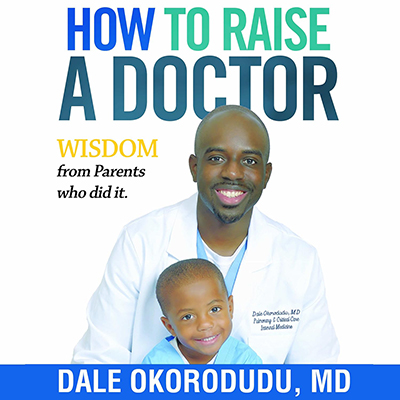
To register for the event, visit https://events.humanitix.com/cedars-sinai/tickets. For children and parents who are unable to attend, Okorodudu recommends reading his book, “How to Raise a Doctor,” which can be purchased on Amazon.com. Parents and students can also view videos of Okorodudu and other doctors speaking about the profession on the YouTube channel DiverseMedicine. Okorodudu also recommends staying up to date with Cedars-Sinai youth programs. For more information visit www.blackmeninwhitecoats.org and follow them on social media, and also stay up to date with Cedars-Sinai's community programs at https://www.cedars-sinai.org/hereforla.html.